What It Takes to Prepare for a Giraffe Birth at Brevard Zoo
Brevard Zoo has two expectant Masai giraffes. Here is how keepers monitor a pregnancy, prepare for birth and support an endangered subspecies.
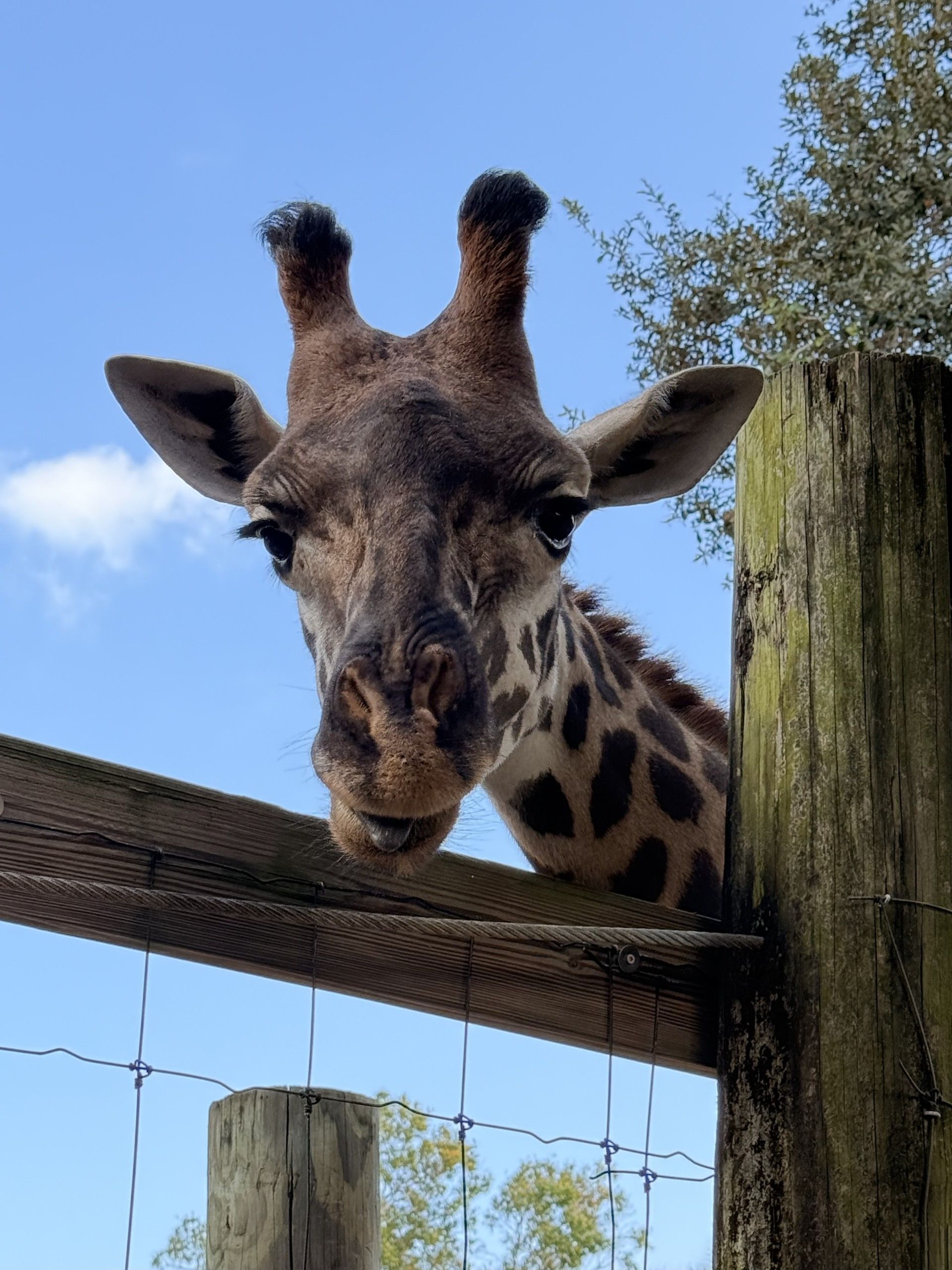
Brevard Zoo has another very tall nursery story developing. Tisa, a 3-year-old Masai giraffe, is pregnant with her first calf. She joins 12-year-old Kumi, whose pregnancy the zoo announced earlier in the year.
The zoo has not welcomed a giraffe calf since Mapenzi was born in 2020. Two pregnancies at once give keepers plenty to watch — and give visitors a chance to understand how prenatal care works for an animal that can stand more than 15 feet tall.
Daily observation matters more than dramatic procedures
A giraffe pregnancy generally lasts about 13 to 15 months. During most of that time, a healthy giraffe continues eating, browsing, moving with the herd and participating in trained care behaviors.
Keepers watch for smaller changes as a birth window approaches: restlessness, reduced appetite and the filling of the udder. Training is especially important. Tisa is known by her care team as curious, confident and eager to participate, which helps keepers observe her closely without turning routine checks into a stressful event.

Photo courtesy of Brevard Zoo and keeper Lindsay Keller.
Birth begins with a six-foot drop
Giraffes give birth standing. A newborn calf can be around six feet tall and roughly 150 pounds, and the drop to the ground helps break the umbilical cord and stimulate the calf's first breath. Healthy calves are often standing within about an hour.
Afterward, mother and calf generally remain behind the scenes while they bond and while the animal care and veterinary teams complete an initial exam. There is no fixed public debut date; the behavior and health of the pair guide that decision.
A calf also matters for conservation
Tisa and Kumi were paired with Mapenzi through the Association of Zoos and Aquariums' Species Survival Plan for Masai giraffes. The program coordinates breeding among accredited zoos to maintain a healthy, genetically diverse safeguard population.
Masai giraffes are endangered in their native range in Kenya and Tanzania, where habitat loss, illegal hunting, disease and other pressures have reduced their numbers. That makes a healthy calf more than a crowd-pleasing arrival. It is one small part of a carefully managed conservation effort.
Visitors can see Brevard Zoo's giraffe tower in Expedition Africa and follow pregnancy updates through the zoo's blog and social channels.
Sources

Stephen Garcia
Stephen covers Brevard's wildlife, parks, science, launches, and aerospace workforce. He is drawn to the people doing technical or conservation work behind the scenes — and to explaining why that work matters close to home.