Behind the Scenes: How Brevard Zoo's Sea Turtle Rehabilitation Center Works
Brevard Zoo’s closed-to-the-public sea turtle hospital has 14 treatment tanks and cares for roughly 100 patients a year. Here is what happens inside.
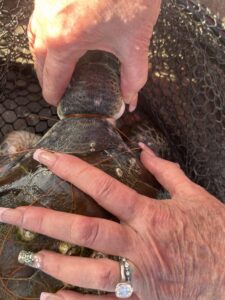
Most Brevard Zoo visitors never see the Sea Turtle Rehabilitation Center. It is not a public exhibit. It is a working hospital where injured and sick turtles receive care before, when recovery allows, returning to the ocean.
According to the zoo's official program information, the center opened in April 2014 and includes 14 treatment tanks across two holding facilities. It cares for roughly 100 patients in a typical year.
Why turtles arrive
Patients may be brought in after boat strikes, fishing-line entanglements, hook ingestion, weakness or washback events. Some are affected by fibropapillomatosis, a disease that can produce tumors on a turtle's skin and around its eyes.
Each animal needs an individual treatment plan. Staff track weight, wounds, eating, behavior and water conditions. Care can include medication, diagnostic work, surgery, laser treatment for tumors and the steady routine of feeding and tank maintenance.
Photo courtesy of Brevard Zoo and the East Coast Zoological Foundation.
The unglamorous work makes release possible
Release photographs show the emotional payoff, but they compress weeks or months of labor into a single walk down the beach. Veterinary staff, rehabilitation technicians and trained volunteers clean tanks, prepare diets, record observations and respond when a patient's condition changes.
The center's closure to visitors protects a clinical environment where animal care comes before public access. Readers can still support the work through the Brevard Zoo conservation program and its current giving and volunteer opportunities.
Anyone who finds a sick, injured or entangled sea turtle should contact the Florida Fish and Wildlife Conservation Commission. Do not push the animal back into the water or attempt to remove deeply embedded gear without direction from responders.
Sources

Stephen Garcia
Stephen covers Brevard's wildlife, parks, science, launches, and aerospace workforce. He is drawn to the people doing technical or conservation work behind the scenes — and to explaining why that work matters close to home.